

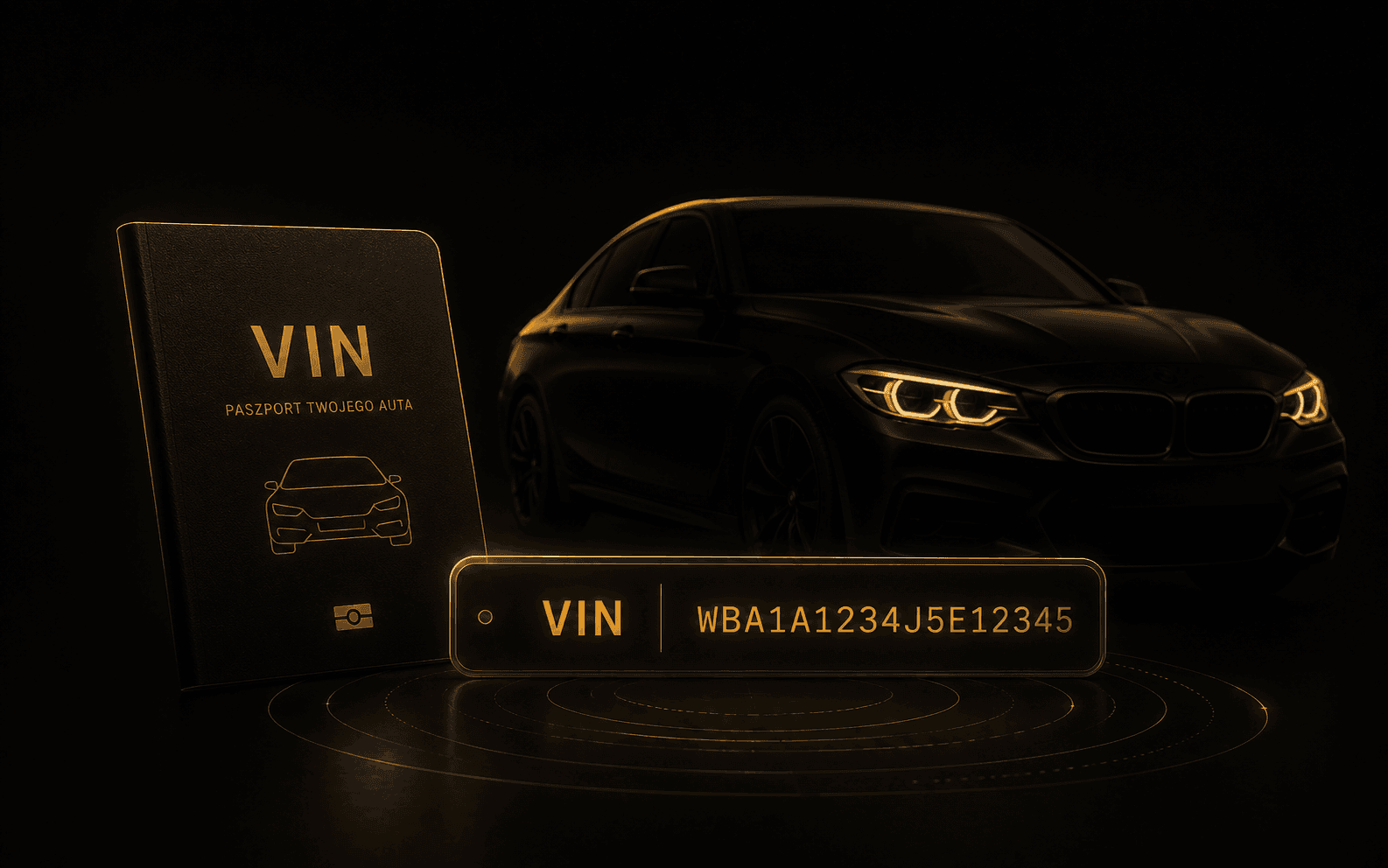
VIN Number - What It Is, Where to Find It and How to Check a Car History
VIN is 17 characters that tell the full story of a car. We explain what each section means, where to find it and how to check a car for free before buying.
Before you pay a deposit, check 7 things: price against the market, photos, model faults and VIN history. We show how - and how an AI agent does it in 60 seconds.

To check a used car before buying, a quick glance at the price and some nice photos is never enough. I've spent twenty-five years at this - first as a mechanic, then helping people avoid buying someone else's problem. The pattern never changes: get excited, skip the homework, pay for it later. Buying used in Poland is an investigation, not a shopping trip. Before you hand over a single złoty of deposit, go through the listing systematically: price, photos, model faults, history, documents.
In short - the 7 things every experienced buyer checks (using the BMW 3 Series, one of the most-listed cars on OtoMoto, as an example):
Let me walk through each one - and at the end I'll show you how an AI agent covers the same ground in 60 seconds, with your first check on the house.
Your first instinct with any listing is "expensive or cheap?" - but without a reference point, that's a coin flip. One BMW 3 Series from 2016 might cost 55k, another 78k, and both prices can be fair, because they differ in engine, mileage, trim and history.
The method is always the same: gather a dozen or a few dozen similar listings (same model, year, comparable mileage and engine) and calculate the median, not the average. The median holds firm against one inflated "classic in exceptional condition" that would otherwise skew the average. If a car sits 20% or more below the median for its year, that's not a bargain - it's a question. Hidden damage? A wound-back odometer? "Need to sell quickly"? Cheap cars are expensive. Something is always off - the question is just what.
This is the most labour-intensive step - done by hand it can eat up an hour of scrolling OtoMoto with a notepad.
Everyone carries a decent camera in their pocket these days. When a listing gives you 5 photos from a single angle, all shot at dusk in a garage - take that as a signal. Daylight and multiple angles reveal what sellers prefer to hide: paint repairs, colour differences between panels, wheel-arch rust, torn upholstery.
Here is what I check specifically:
Every model carries a known list of weak points - go in blind and you're paying for that ignorance. On the BMW 3 Series, there are a few you need to know before you even pick up the phone: a stretched timing chain on N47 diesels (roughly 2007–2011) - the chain sits at the rear of the engine, which makes replacement genuinely costly; the chain can also give trouble on petrol N20 engines from early years; DPF and EGR headaches on diesels used mainly in town; and on older E90s, rust on the rear wheel arches and jacking points. These aren't reasons to walk away - they're your checklist for what to ask about and what a repair actually costs.
We broke down the specific BMW 3 Series faults (E90 and F30) with repair-cost ranges in a separate guide: BMW 3 Series - common problems and repair costs. Worth reading before a viewing.
The VIN is a 17-character vehicle identification number. Any serious seller will give it to you without hesitation - in the listing or on first request. A car is only as honest as its paperwork, and a seller who stalls on the VIN is already telling you something. With the VIN and the registration number you can run a free check on the Polish government's Vehicle History service (historiapojazdu.gov.pl, powered by CEPiK data): inspection mileage, registration dates, reported damage - it takes 5 minutes. For the deeper picture - origin countries, foreign collisions, finance blocks - you need a paid VIN report.
For the full breakdown on reading a VIN and where to check it: VIN number - what it is and how to check a car's history.
Good questions save you a very long drive for nothing. Ask about the things that are hard to fake and easy to verify once you're standing next to the car:
Walking in without numbers gives you "can we do something on the price?" - and you'll get a shrug. Walking in with research gives you "the median for this year and mileage is X, the car needs Y and Z, I'm coming in at this figure." The reference point from step 1 plus the fault list from step 3 give you a realistic target price and arguments the seller can't brush off with a one-liner.
In the end, it comes down to a single call. Not "nice car" - but: DEAL (price and condition check out, book the viewing), NEGOTIATE (there's potential, but not at that asking price) or SKIP (too many red flags, don't waste your afternoon). If you spot three or more warning signals in a listing at once, there's rarely a point making the drive.
We gathered the full list of 10 red flags in listings here: what to watch out for in used car listings.
Done properly, these 7 steps take the better part of an hour per listing. The Autolert AI agent covers the same ground in about 60 seconds. You paste a link from OtoMoto or OLX, and the agent:
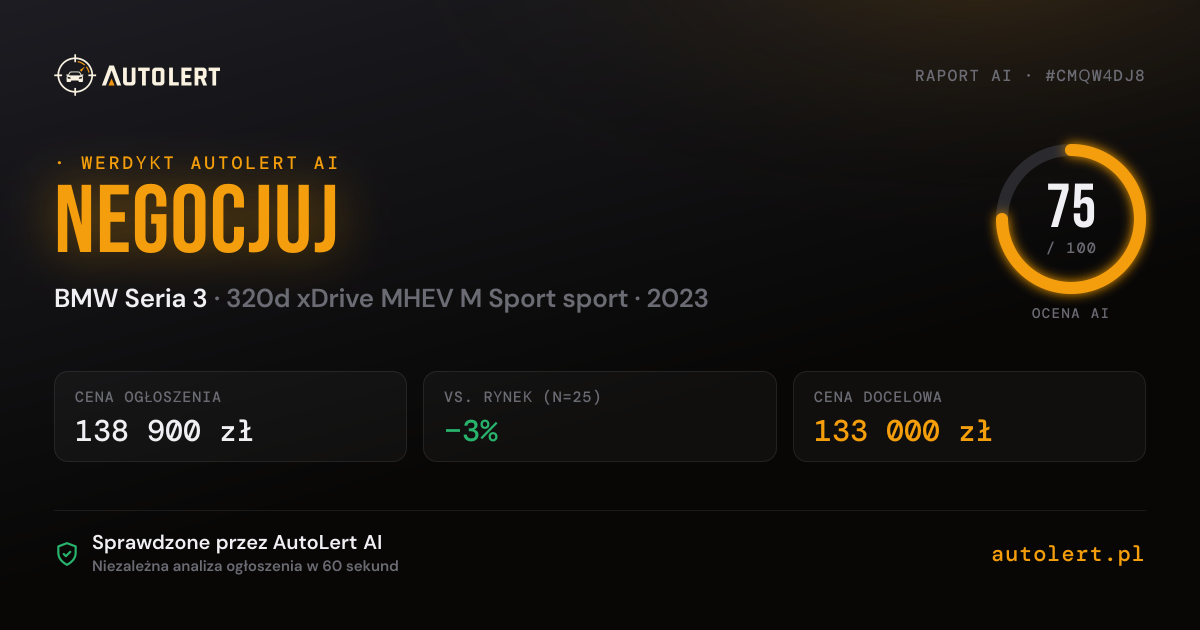
An AI report supports your decision - it does not replace an in-person mechanic inspection. The agent narrows the field and tells you which listings are even worth your time; the final call and the test drive are always on you.
Next time you come across a listing you're not sure about - instead of an hour with a notepad and a calculator, paste the link and let the agent do the legwork. Your first report is free.
VIN is 17 characters that tell the full story of a car. We explain what each section means, where to find it and how to check a car for free before buying.

What breaks on BMW E90 and F30, how much repairs cost and how to inspect a used example. Fault list with prices and a pre-purchase checklist - straight talk.
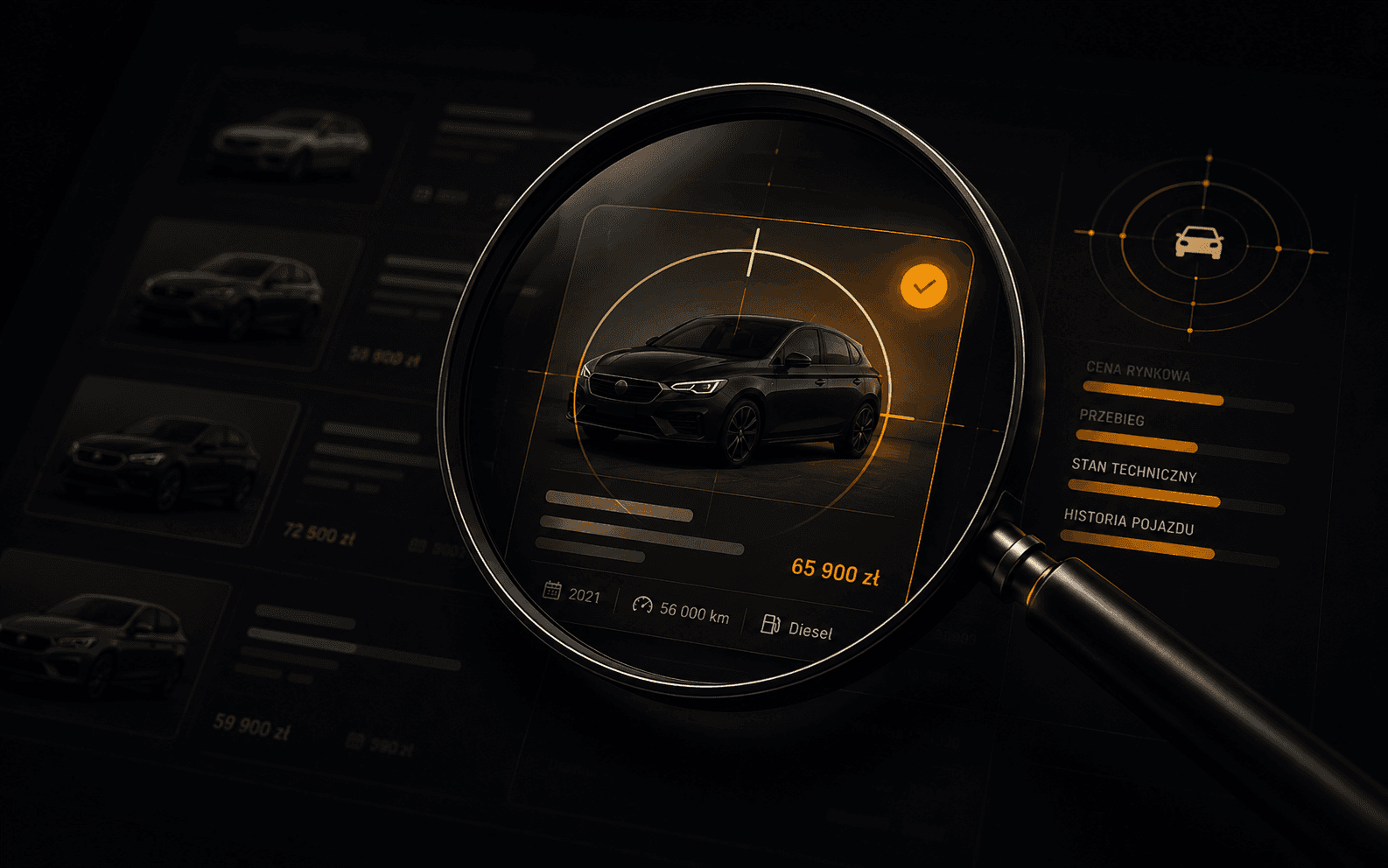
The Polish used-car market is a minefield. From 47 AI reports we extracted 10 red flags that should immediately stop you before scheduling a viewing.